Neighbourhood connection improves mental health
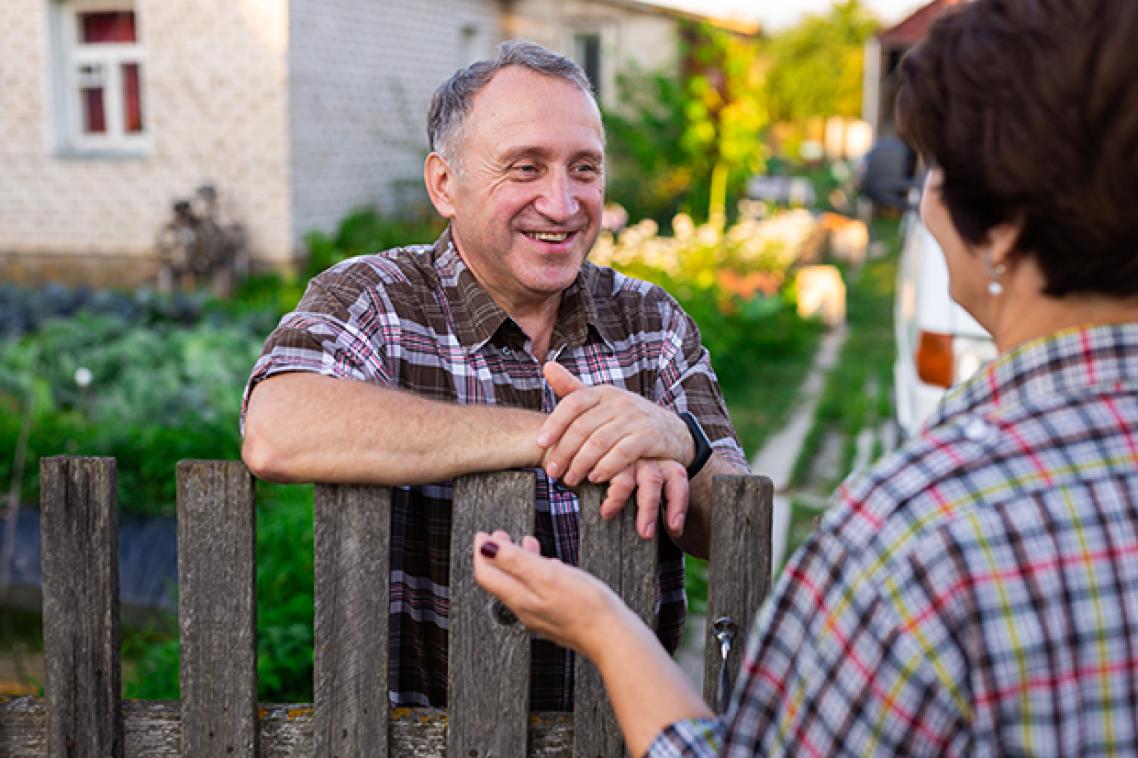
University of Queensland research has found building a sense of community is key to improving people’s mental health, particularly in low socio-economic suburbs.
Professor Alex Haslam from UQ’s School of Psychology is part of a research team that modelled the effect of social and psychological factors, and identified a strong but complex link between where people live and their mental health.
“We found people who live in disadvantaged or resource scarce postcodes have worse mental health than those in advantaged or resource abundant neighbourhoods,” Professor Haslam said.
“But it’s not only advantage or disadvantage that matters.
“We found people tend to have greater resilience when they feel part of a community, which can prevent symptoms of depression and reduce stress and anxiety.
“There are many features of a neighbourhood that can affect health and wellbeing, and it’s important to understand those when promoting health in the community.”
The researchers integrated the findings of more than 50 studies conducted with community groups globally, including sports clubs, charities, men’s sheds, choirs and other hobby groups.
Professor Haslam said the research showed community-based initiatives designed to improve health and wellbeing were most effective when they contributed to neighbourhood identity-building.
“We find when residents relate to each other in terms of a shared neighbourhood identity this tends to be very good for their mental health,” Professor Haslam said.
“When neighbourhoods are designed with this goal in mind, activities like volunteering, grassroots participation, and campaigns to promote connection are a good opportunity for policy makers to have a positive impact.
“Community grants and spaces that allow local groups to develop and enact an inclusive sense of shared identity help to increase the social participation of vulnerable and disadvantaged people in ways that are good for them and the wider community.
“When people see their neighbourhood as cohesive, this increases their willingness to work together in ways that support mental health.
“A central insight of our work is shared social identity is the key to understanding and improving the mental health of neighbourhoods, and this needs to be a focus for efforts to unite and heal fractured communities.”
The research paper was published in Sage Journals.
Related articles

Brisbane woman runs 50km for 50 days to break barriers for para-athletes