
Gigantic Jurassic raptor footprints unearthed
Key points
- Scientists have unearthed large raptor tracks in Fujian Province, China
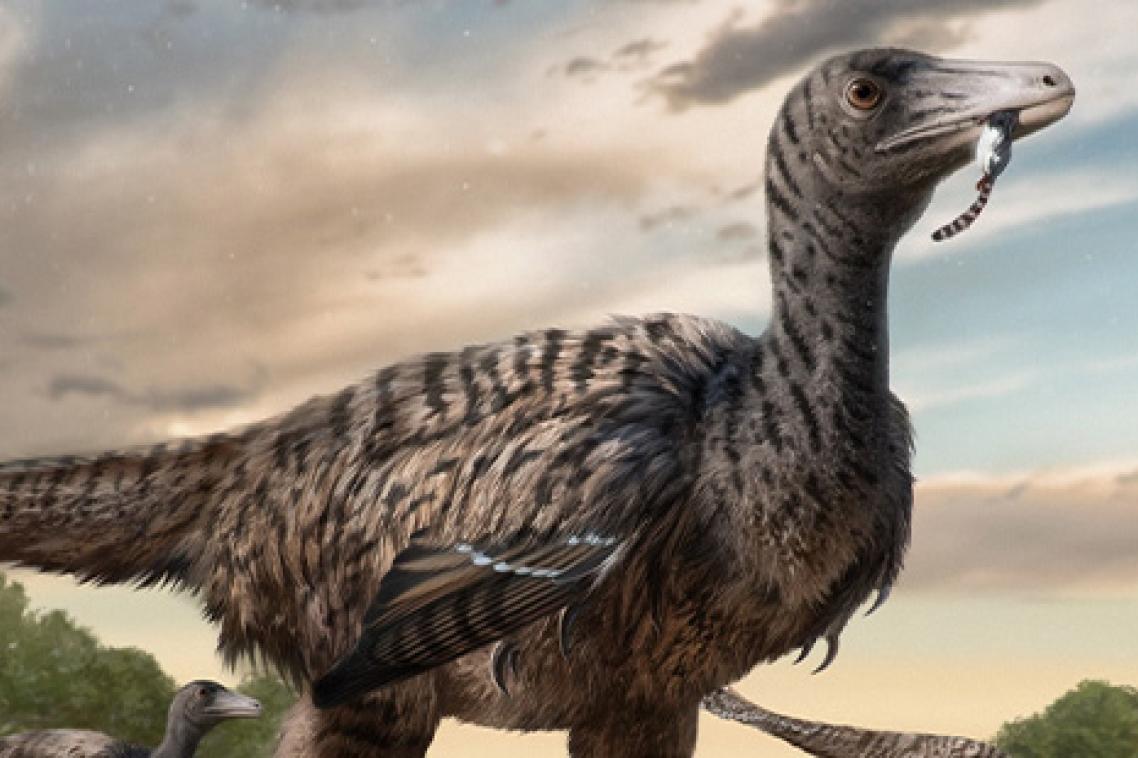
- The tracks belong to a member of the Troodontids dinosaur family which had legs as long as 1.8 metres, far exceeding other known raptor sizes
- The discovery showcases size diversity among raptor dinosaurs
Scientists have discovered the tracks of a 5 metre-long raptor dinosaur, challenging what was previously known about the species’ size range.
The tracks were found in Fujian Province in south-eastern China by an international team of researchers with palaeontologist Dr Anthony Romilio from The University of Queensland’s Dinosaur Lab providing detailed analysis.
“When people think of raptor dinosaurs, they most likely think of those in the Jurassic Park movies – human-sized, muscly, aggressive hunters,” Dr Romilio said.
“But these tracks were left by a much slimmer and brainier group in the Velociraptor family known as Troodontids, which emerged in the late Jurassic period around 95 million years ago.
“This raptor was around 5-metres-long with 1.8 metre-long legs, far exceeding the size of the raptors depicted in Jurassic Park.
“Imagine something like that coming at you at full speed!”
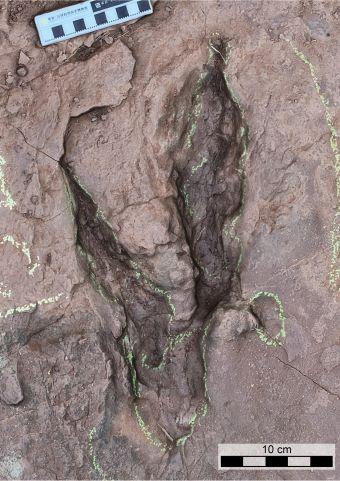
A raptor track in Fujian Province, south-eastern China.
(Photo credit: Anthony Romilio.)
The tracks were discovered in 2020 by a research team led by Associate Professor Lida Xing from China University of Geosciences, which set out to explore reported dinosaur footprints in the Fujian province.
The footprints of a variety of dinosaurs were uncovered, including the two-toed tracks characteristic of raptor dinosaurs.
Dr Romilio said the tracks were compared with other known two-toed dinosaur tracks from across Asia, North and South America and Europe.
“We found this track type is distinct in shape, making it quite unique,” he said.
“The concept of large Troodontids has only recently emerged in the paleontological community.
“Bones discovered in Alaska hint at a trend toward gigantism near the ancient Arctic circle, an area with potentially less species competition due to extended periods of winter darkness.
“But our findings suggest these raptor giants roamed much further south and were more widely dispersed.
“Interestingly, some of our research team has also worked on the world’s tiniest dinosaur footprints – raptor tracks in South Korea that are just one centimetre long.
“It just goes to show the incredible size range among raptor dinosaurs, highlighting their adaptability and ecological diversity.”
The track type has been named Fujianipu in homage to the province where the tracks were found.
The research paper is published in iScience - Cell Press.
Related articles

UQ rises 22 places in 2027 QS Sustainability Rankings
