
The changing landscape of agricultural and food education: why now is the time to jump in
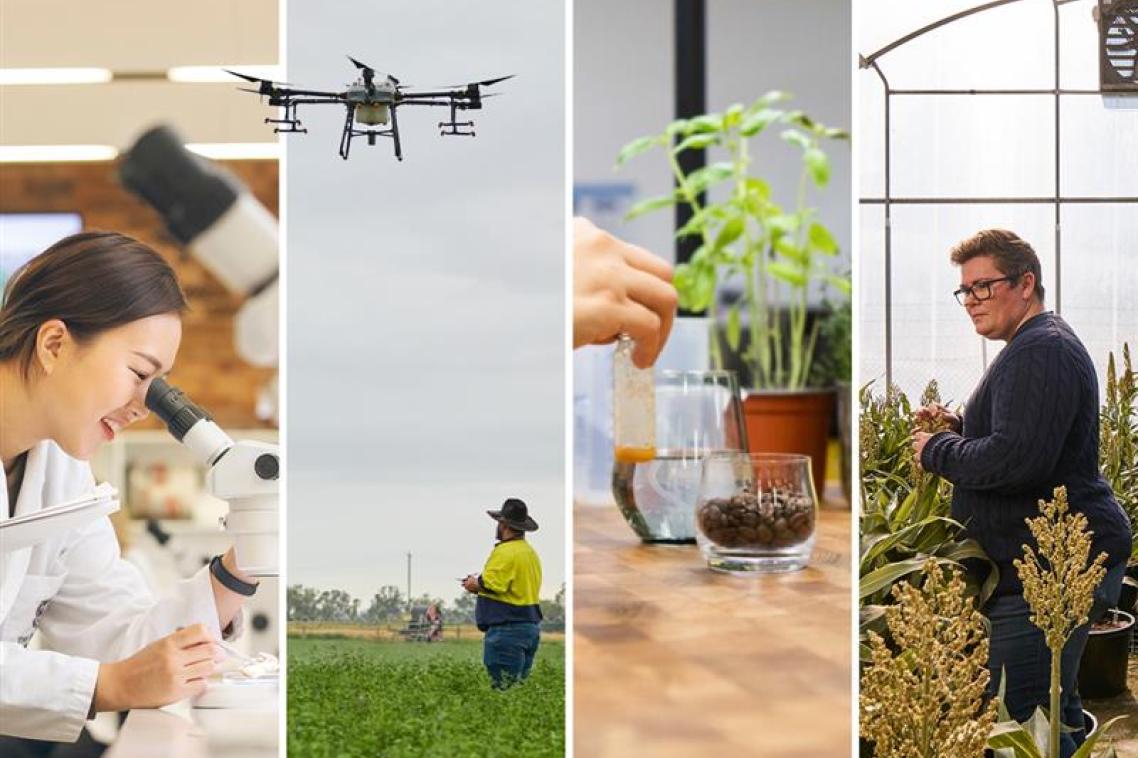
(Photo credit: The University of Queensland. )
Today’s agricultural and food manufacturing sectors operate at the cutting edge of science, applying technological and engineering principles to develop safe, nutritious and sustainable food products that respond to global challenges such as climate change, food security and sustainable resource management.
Growth and jobs
For school leavers considering their next step, agriculture and food science offer not just a career, but a future of impact and innovation.
Australia’s agricultural, food science and technology sectors are booming, contributing more than $100 billion annually to the economy, and employing more than 400,000 people nationwide. Yet the industry faces a critical skills shortage. For every graduate in agricultural and food science disciplines, 6 jobs remain unfilled. The field is much broader than traditional farming, with modern careers being inherently interdisciplinary, integrating data science, biotechnology, engineering, environmental sustainability and global policy.
Food beyond the farm
Every meal you eat relies on the safe, nutritious and sustainable production, processing and distribution of food. Without food safety, there is no food security. Food scientists ensure that what reaches your plate is safe, high-quality and produced responsibly. They develop innovative products, extend shelf life and prevent contamination. The demand for food scientists is skyrocketing as populations grow and supply chains become more complex. Careers in this field span food safety auditing, new food product development, quality assurance and research into healthier, more sustainable foods that taste great. At UQ, our programs in food science and technology prepare graduates to lead in these areas, combining chemistry, microbiology, and engineering with industry-focused training.
The landscape of agrifood education has shifted dramatically. No longer confined to traditional farming, today’s curriculum integrates climate resilience, biosecurity and food innovation. Speed-breeding programs pioneered at UQ are helping develop climate-ready crops six times faster than conventional methods. Our graduates don’t just work on farms, they lead agribusiness ventures, develop safe, nutritious and sustainable foods with industry partners, and influence global policy.
Choose the opportunities
Applications for Semester 1, 2026 open via QTAC until 8 December. Choosing agriculture or food science means choosing a future where your work matters – where you can innovate, lead and make a tangible difference. It’s a pathway that combines science, sustainability and global impact, all while offering strong job security and career progression.
So, if you’re a school leaver wondering what’s next, consider this: agriculture and food science aren’t just about being a farmer on a tractor, they’re about shaping the future. At UQ, we’ll give you the tools, knowledge and experiences to do exactly that.
Don’t miss your chance to be part of the next generation driving change in agriculture and food science and technology.
The University of Queensland is ranked #1 in Australia and #15 globally for agriculture and forestry, with programs that combine science and theory with hands-on experience. UQ is ranked #1 in Australia for food science and technology and among the global top in this field.
Dr Deirdre Mikkelsen, lecturer, School of Agriculture and Food Sustainability, The University of Queensland; Dr Suresh Krishnasamy senior lecturer, School of Agriculture and Food Sustainability, The University of Queensland.
Topics
Related articles
Flowering discovery could lead to more reliable mungbean yields
