
Crayfish and their worms evolve in unison
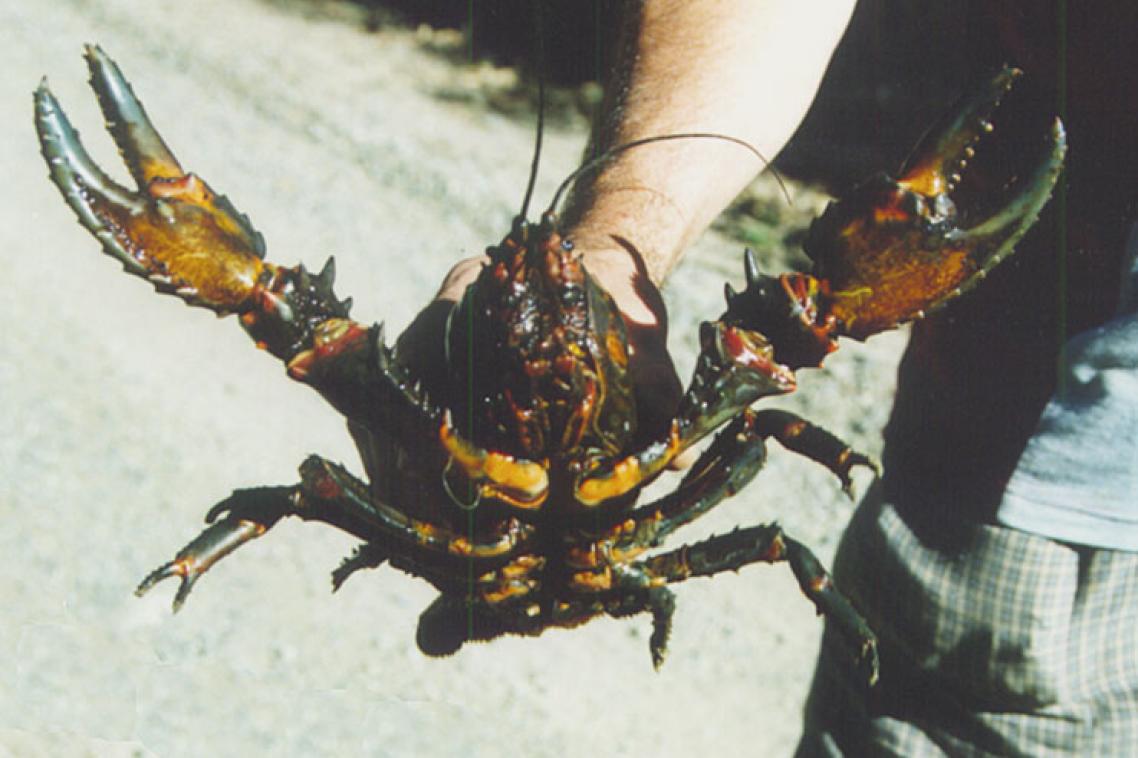
Climate change could be affecting Australian spiny mountain crayfish and the animals that live on them, according to an international study that includes University of Queensland research.
UQ Centre for Microscopy and Microanalysis researcher Dr Kim Sewell said the study reconstructed the evolutionary history of 37 species of Euastacus crayfish and 33 species of temnocephalans, which are their flatworm passengers.
“These worms, often mistaken as leeches, have been known to science for more than 100 years,” Dr Sewell said.
“Australia is now recognised as the centre of world diversity for the group.”
Dr Sewell said fishers often mistook the worms for parasites that could mean the crayfish are unsuitable to eat.
“The worms are actually ectosymbionts, which means they occupy their hosts without causing harm and could even play a role in cleaning the crayfish.
Dr Sewell has studied the worms for almost 30 years, and has collected DNA tissue samples from most of the known species of Australian Euastacus spiny mountain crayfish and their temnocephalan ectosymbionts.
He said the study revealed co-evolutionary patterns and host-shifts during a period of extensive environmental change covering at least 80 million years.
“Euastacus crayfish are cool-climate specialists, and are most distinct in tropical northern Australia where they are now restricted to high mountain streams,” he said.

“Protection of these vulnerable crayfish is critical for their survival and the survival of their unique symbionts, which together provide an exceptional insight into the phenomenon of co-evolution through space and time.”
The study, published in the Proceedings of the Royal Society B, involved a collaboration of genetics and biology experts from the University of Cambridge and the Natural History Museum in the United Kingdom and from (The University of Queensland, the Queensland Museum, James Cook University, and Latrobe University, Wodonga.
A short video showing temnocephalan worms attached to a spiny mountain crayfish (Euastacus spinifer) from Sydney can be viewed here. Credit: Jasper Montana and David Blair from James Cook University
Media: Kim Sewell, k.sewell2@uq.edu.au, +61 7 336 54210.

Picture captions:
1. Dr Kim Sewell with a large spiny Gippsland crayfish Euastacus kershawi in Victoria. Image by Susan Lawler, Latrobe University, Wodonga.
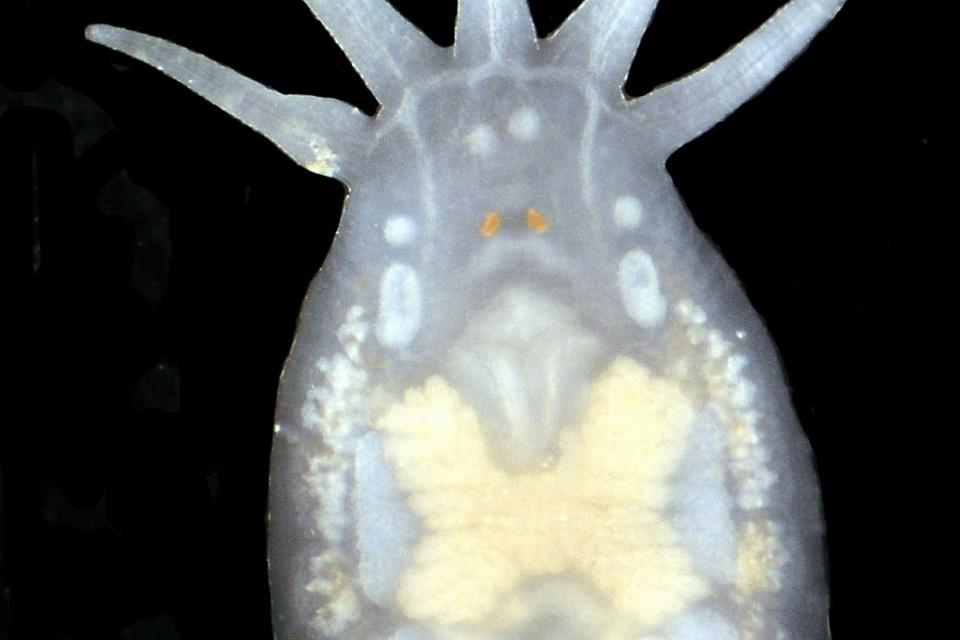
2 and 3. Light microscope images of a typical five-tentacled temnocephalan, Temnosewellia c.f rouxi, and a pair of two-tentacled temnocephalans, Diceratocephala boschmai, from cultured redclaw crayfish. Both species are about 5mm in length. Images by Katherine Thompson and David Blair from the School of Integrated Biology, James Cook University.
Topics
Related articles

UQ researchers send an unblockable message using gravity
