
Kimberley’s ancient environmental past a click away
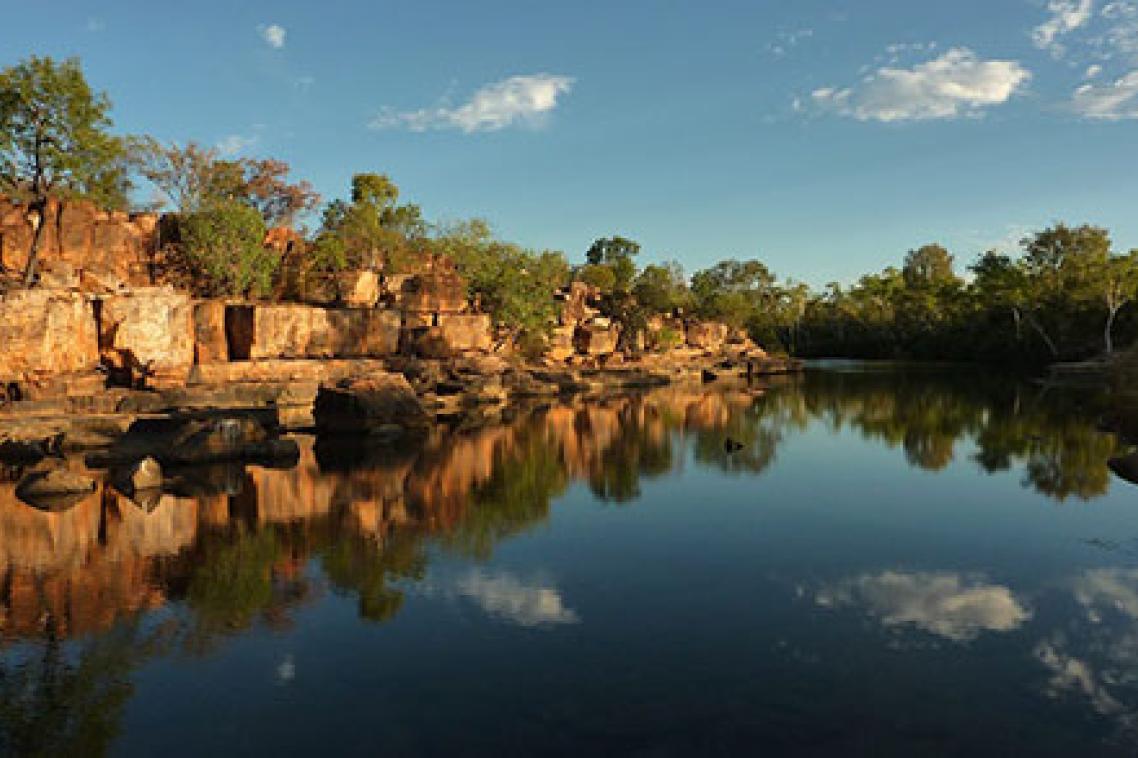
The environmental and climate history of the past 60,000 years of Australia’s Kimberley region is set to be uncovered by a multidisciplinary team led by a University of Queensland scientist.
School of Earth and Environmental Sciences Professor Hamish McGowan said the team is hoping to provide a new understanding of the causes of environmental change in the region since the arrival of Australia’s earliest inhabitants.
“We’re developing a history of the Kimberley’s environmental past, allowing us to better understand the history of its cultural artefacts – particularly the rock art in the area – and the causes of past environmental change,” Professor McGowan said.
“We’ll be mapping using drones, as well as creating past climate states – palaeoclimate reconstructions – by analysing drilled sediment cores and mineral deposits.
“Our findings will allow us to more accurately predict future climate and environmental change in the Kimberley, inform policy and contribute to the sustainable use and management of the region.”
Cas Bennetto, CEO of the project’s key collaborator, the Kimberley Foundation of Australia, said she is particularly enthusiastic about the development of Australia’s first paleo-environment e-atlas.
“Ultimately anyone – researchers, academics, school children and the general public – will be able to access the Kimberley e-atlas,” Ms Bennetto said.
“Users will be transported back 60,000 years and can pinpoint what the temperature, the precipitation and monsoon activity was.
“You’ll be able to put your cursor on the map of Google Earth – 35,000, 50,000 or 60,000 years ago – bringing the science to life.”
Ms Bennetto said that more broadly, the project would help paint a full picture of Australia’s history.
“This collaboration feeds into a vast universe of Kimberley rock art research, as we unravel 60,000 years of traditional culture and explore Australia’s earliest settlement story.
“By unlocking the region’s paleo environment, and researching and dating rock art, we’re learning how to conserve and protect this precious heritage and environment.”
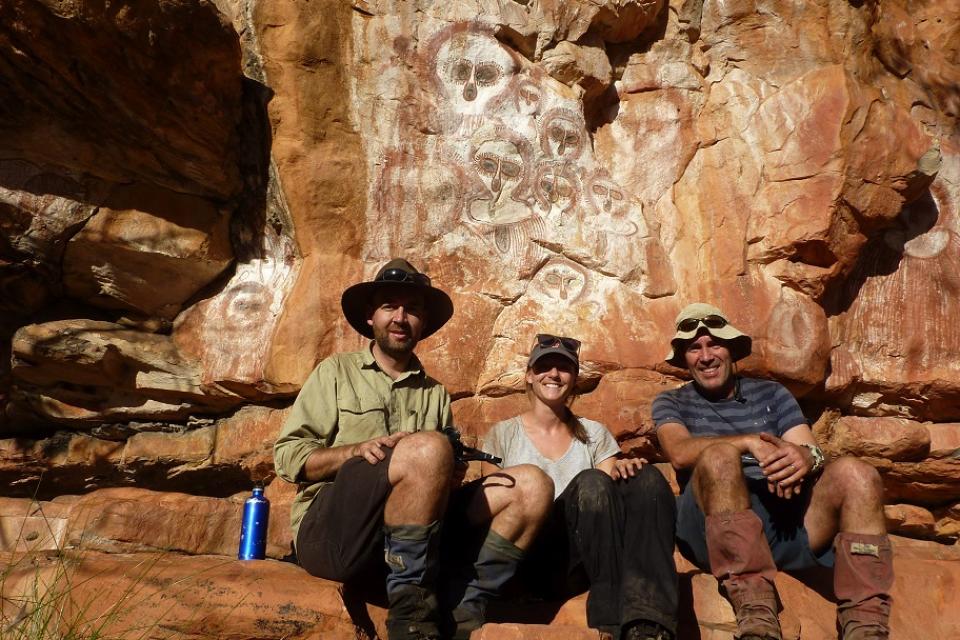
Image: L-R, Dr Samuel Marx, University of Wollongong; UQ's Dr Emily Field and Professor Hamish McGowan.
Media: Professor Hamish McGowan, h.mcgowan@uq.edu.au, +61 7 3365 6651; Cas Bennetto, admin@kimberleyfoundation.org.au, +61 3 9653 3780; Dominic Jarvis, dominic.jarvis@uq.edu.au, +61 413 334 924.
Topics
Related articles

UQ researchers send an unblockable message using gravity
