
Australia’s rarest bird on menu for wedged-tailed eagle
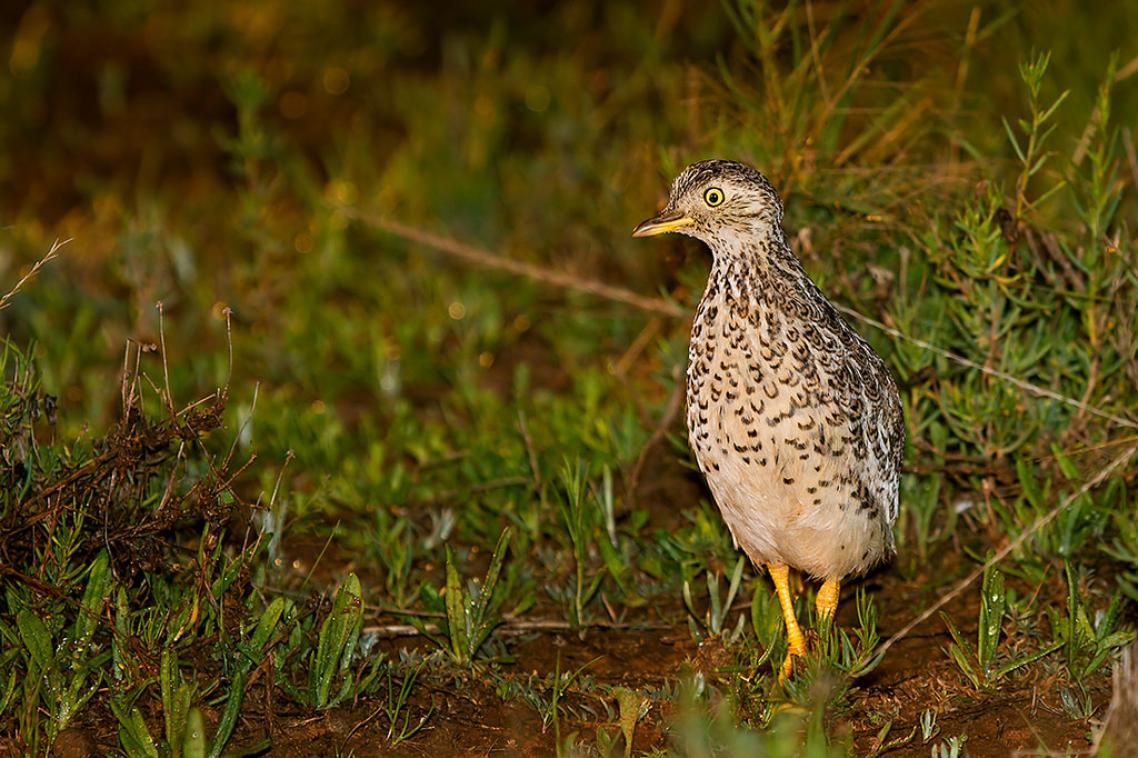
A successful rabbit cull two decades ago has had unforeseen consequences, with a study finding wedge-tailed eagles are now preying on one of Australia’s rarest birds.
The University of Queensland research found that more native species, including the critically-endangered plains-wanderer, were now being taken by wedge-tailed eagles.
UQ School of Biological Sciences PhD candidate Graham Fulton said the change in diet occurred when a radical approach was taken to reduce out-of-control rabbit populations.
“The rabbit haemorrhagic disease virus or RHDV – a virus that only harms rabbits – was introduced into western New South Wales in 1996 and 1997,” he said.
“In terms of reducing rabbit numbers, it was hugely successful, in some areas killing up to 90 per cent of rabbit populations.
“What was probably not recognised at the time, was that rabbits were between 56 and 69 per cent of the wedge-tailed eagle’s diet, so after the cull their diet had to change.
“Eagles had to become opportunists, turning their attention to native animals.”
The study identified bird remains in wedge-tailed eagle nesting sites in western New South Wales.
“They included the carcasses of cockatoos, galahs and magpies, but also the extremely rare plains-wanderer,” Mr Fulton said.
“Australia’s rarest and most important bird, it is a living fossil, the sole survivor of its genus and family.
“With only 1000 plains-wanderers alive today, any extra pressure may drive the species to extinction, especially from a population as large as the wedge-tailed eagles.”
Mr Fulton, who is the Editor of Pacific Conservation Biology, said conservation of the plains-wanderer was generally considered to be the most urgent of any bird in Australia.
“While the RHDV was successful in reducing competition between rabbits and native herbivores, the sudden loss of such a large number of primary consumers dramatically changed the food web.
“If we’re to protect rare species, it’s absolutely critical that we understand the full ecological effects of these interventions, because Australia’s rarest bird has become even rarer.
The research has been published in Australian Field Ornithology (DOI: 10.20938/afo36000000).
Media: Graham Fulton, g.fulton@uq.net.au; Dominic Jarvis, dominic.jarvis@uq.edu.au, +61 413 334 924.
Related articles

UQ researchers send an unblockable message using gravity
