
COVID-19 has made us more sustainable
COVID-19, rather than the threat of climate change, has spurred Australians to become more sustainable, according to research from The University of Queensland.
A study led by Dr Franzisca Weder from UQ’s School of Communication and Arts found sustainable behaviours were becoming the ‘new normal’.
“During lockdowns at the start of the COVID-19 pandemic we found people became more conscious about their home, neighbours and community,” Dr Weder said.
“It also led to many people questioning if they could be self-sufficient in a crisis, which was driven by food shortages in supermarkets.
“We found people were making healthier food choices, practising better waste management and adopting other behaviours you’d expect from lockdowns such as less travelling and more cycling, walking and running.”
Dr Weder said it was surprising that COVID-19 had prompted people into taking action to become more sustainable, when recent climate reports had not.
“The Intergovernmental Panel on Climate Change report in 2018 called for rapid, far-reaching and unprecedented changes in all aspects of society to avert the worst disasters of climate change,” she said.
“But these kind of reports do not spur citizen action, at least not as much as COVID-19 apparently has, and especially not in Australia.”
“Studies before COVID-19 suggested people’s feelings around the climate crisis were predominantly anxiety and guilt, but results from this research suggest the pandemic made people more angry,” she said.
“This is good because anger provides a stronger motivation to change things permanently.”
The study involved surveying people in Brisbane as well as in Austria, and Dr Weder said it was fascinating to compare the two.
“Only about a third (32 per cent) of Brisbane respondents labelled climate change as the most urgent issue facing their country, compared to about half (47 per cent) of those from Austria,” she said.
“And only 54 per cent of Brisbane respondents were worried or extremely worried about climate change, compared to 80 per cent of those in Austria.”
Dr Weder said sustainability had taken on a whole new meaning since the pandemic.
“Not everyone knows exactly what ‘sustainability’ is – we’re told it’s doing things like preserving water, recycling, and putting solar panels on our roof,” she said.
“But I think we need to stop relying on these pre-definitions and try to find our own meaning.
“Sustainability could become a value, like integrity and inclusion, and a way for us to find a way to be a good citizen.”
The research is published in Sustainability.
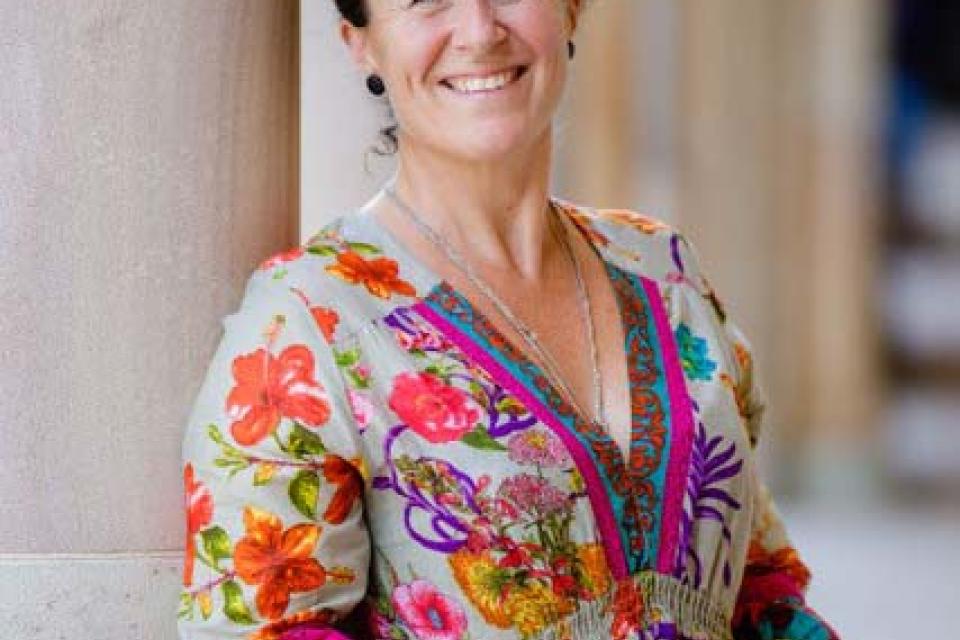
Image above left: Dr Franzisca Weder.
Media: Dr Franzisca Weder, f.weder@uq.edu.au, +61 (0)491 754 828; UQ Communications, communications@uq.edu.au, +61 (0)429 056 139.
Related articles

White wine drinkers help pinpoint what’s missing in no and low alcohol drinks
