
Whale of a time
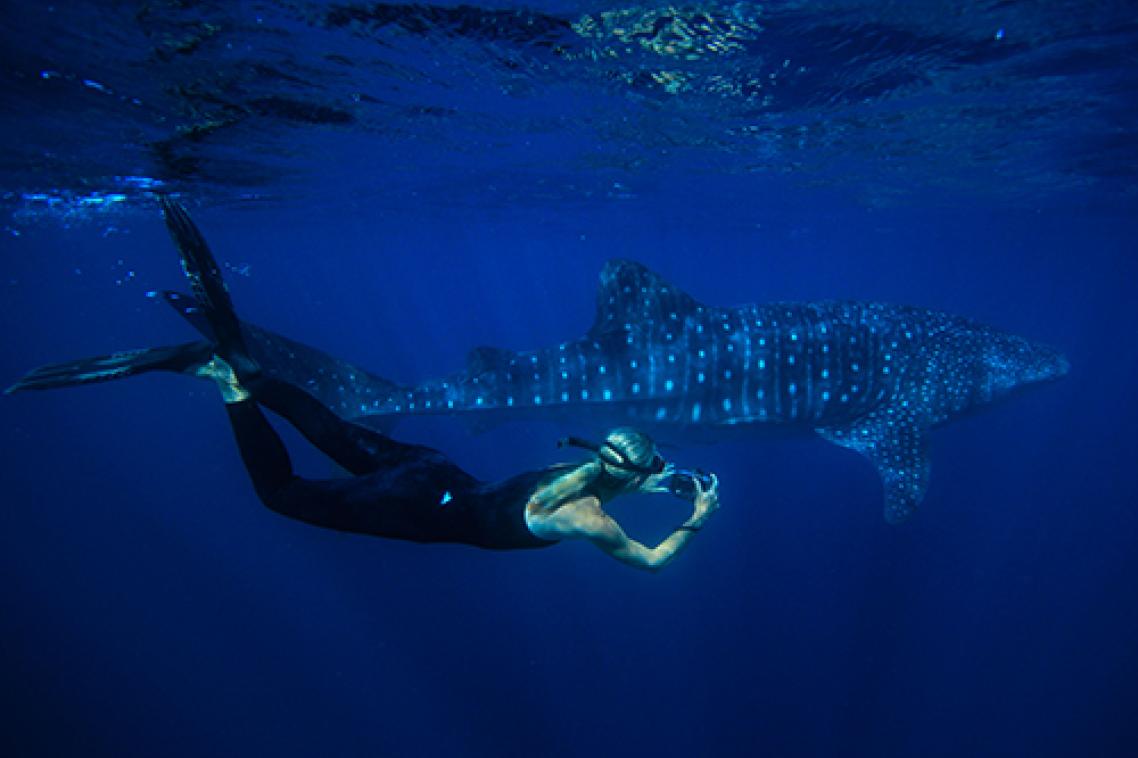
A citizen science initiative collecting data on the world’s biggest fish is a finalist at Australia’s premier science awards.
Led by University of Queensland scientists Samantha Reynolds and Dr Brad Norman, the ECOCEAN Whale Shark Research, Education and Conservation Project is in the running for the Eureka Prize for Innovation in Citizen Science.
Ms Reynolds, a PhD candidate, said utilising volunteers to collect data had been critical to her research, and she was delighted they had been recognised.
"The public has been incredible, sending us really solid data in the form of whale shark descriptions and photographs,” Ms Reynolds said.
That input has been used alongside satellite tracking and star-mapping technology, to help researchers better understand the movements and ecology of this endangered species.
“We’ve discovered that whale sharks have been returning to Ningaloo Reef for more than 20 years, as well as documenting the first fully-tracked return migrations and finding out the Reef is used by whale sharks year-round.”
Ms Reynolds and the ECOCEAN team was keenly looking forward to the exclusive reception for the finalists and the Award Dinner at Sydney Town Hall on 29 August.
he Eureka Prizes recognise the best in Australian science, research and innovation, leadership, science engagement, and school science.
“They’re like the Academy Awards for science, which is great, because I think all scientists should be treated like stars,” Ms Reynolds said.
“Most importantly, the ECOCEAN team’s efforts are helping to conserve whale sharks for future generations.
“This research will help us understand more about important habitat for whale sharks and their long-distance movements.”
Ms Reynolds said although whale sharks were protected in Australian waters, their movements could take them into areas with threats such as pollution, ship-strike and even targeted hunting.
“This data collected by our citizen scientists will allow us to protect whale sharks and the areas that are important for their survival.”
Media contact
UQ Communications
communications@uq.edu.au
+61 429 056 139
Related articles

Want to help Nepal recover from its deadly floods? Here’s what tourists need to know
