
Setting sail to save the Great Barrier Reef
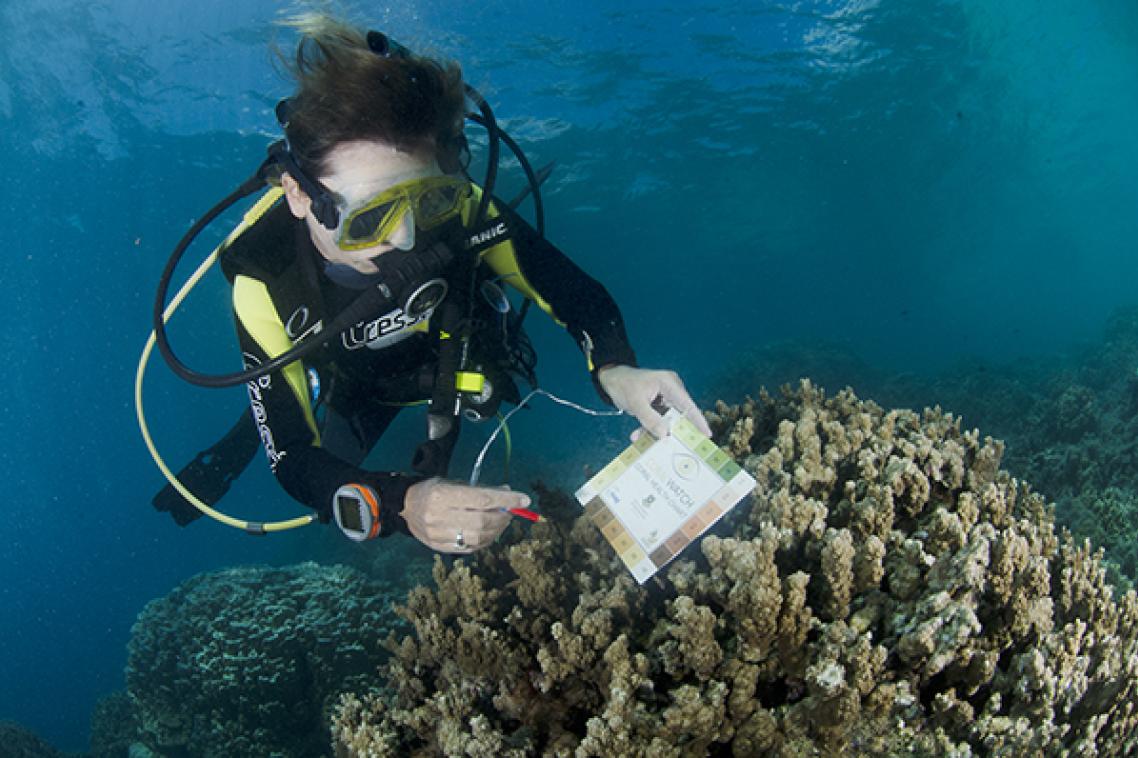
A University of Queensland researcher will take to the high seas as part of an expedition aiming to help preserve the Great Barrier Reef.
Professor Justin Marshall, from UQ’s Queensland Brain Institute, will join the Search for Solutions cruise organised by the non-profit Great Barrier Reef Legacy (GBR-Legacy) enterprise and the Northern Escape Collection tour company.
The trip will take Australia’s top marine scientists, photographers, film-makers and educators to the far-northern Great Barrier Reef in an attempt to build a community solution to the continued loss of habitat.
Professor Marshall is the founder and director the CoralWatch citizen science project that encourages non-scientists to contribute information about coral health to a global database.
“More important than just gathering data is helping participants understand what is happening to our reefs and why,” Professor Marshall said.
“A great way to do that is by encouraging participation in science – on the reef, at home and in the class.
“We will be filming the underwater environment with the latest 360-degree cameras, and GBR-Legacy and CoralWatch will work together to create a new immersive virtual reality reef experience to educate school and community groups.”
CoralWatch Manager Diana Kleine, who took part in the GBR-Legacy’s 2017 expedition, said she hoped this trip would be just as successful.
“The data collected on this expedition will help us understand why some sites and corals survived the mass bleachings in 2016/2017, and will help contribute to CoralWatch’s mission of raising awareness and encouraging a sustainable future,” she said.
GBR Legacy founders Dr Dean Miller and John Rumney have gathered some of the world’s best photographers and film-makers to record the reef as it spawns this year.
They include National Geographic legend David Doubilet, Australian Geographic photographer of the year Justin Gilligan, and Miller himself, who helped film for Sir David Attenborough’s “Great Barrier Reef Series”.
Mr Rumney said the expedition coincided with a US National Oceanic and Atmospheric Administration (NOAA) heightened alert for another bleaching event this summer.
“That would make three consecutive years of bleaching events, which severely challenges the remaining reef,” Mr Rumney said.
Schools wanting to participate can find out more information here.
Media: Professor Justin Marshall, Justin.marshall@uq.edu.au, www.CoralWatch.org. +61 423 024 162; Diana Kleine, d.kleine@uq.edu.au, +61 402 385 391; Monique Grol, CoralWatch Manager, m.grol@uq.edu.u, +61 7 3365 3127; Dr Dean Miller, Dean.Miller@GBRLegacy.org, +61 426 778 085; John Rumney, John.Rumney@GBRLegacy.org, +61 417 726 622.
Related articles

How brainless sea sponges use sunset as a cue to prepare for metamorphosis
