
Mutually-assured destruction in heated coral-algae war
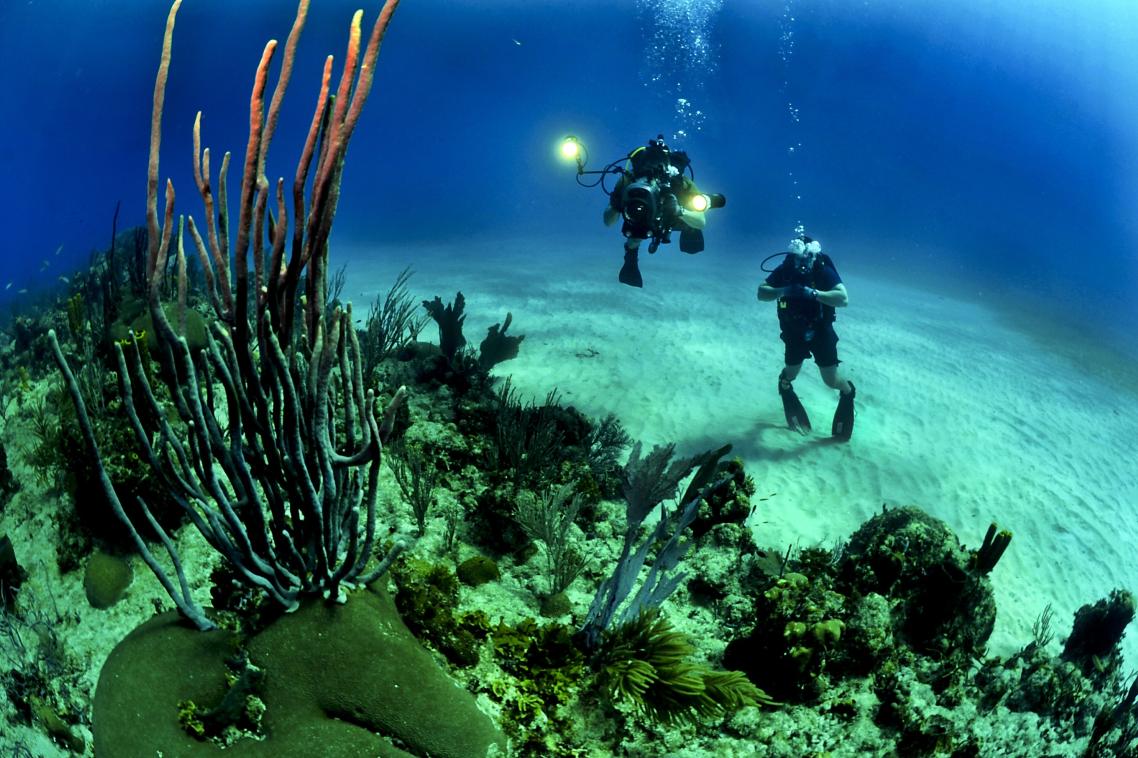
Global warming and acidifying oceans are creating an intense competition between coral and algae that both are set to lose.
University of Queensland School of Biological Sciences’ Dr Kristen Brown said it was previously thought that human-induced stressors like climate change would result in an algal takeover, but experiments conducted on the southern Great Barrier Reef have suggested otherwise.
“Coral and macroalgae principally compete through direct physical or chemical mechanisms, and more algae can mean an increase in coral bleaching and mortality,” Dr Brown said.
“So far, our warming and acidifying oceans have led to a shift in competitive advantage between macroalgae and coral, generally in favour of algal species,” she said.
“But in our experiments – using the branching coral Acropora and the green algae species Halimeda – we looked even further into the future, to see if macroalgal competitive mechanisms will increase at the expense of the coral.
“It turns out, both the algae and coral examined here fail to thrive in our business-as-usual climate predictions.”
The experiment began at UQ’s Heron Island Research Station on the southern Great Barrier Reef, with scuba divers retrieving coral and algal fragments from the reef slope.
The specimens were then brought back to the research station, where they were incubated in 24 tanks for two months under different climate change scenarios simulating mid-late century conditions.
“We then performed multiple physiological measurements in the lab to determine how competition with algae under these stressful conditions might affect the growth of coral reefs,” Dr Brown said.
“And the results were clear – the combined effects of ocean warming and acidification reduced survivorship, calcification and photosynthesis of coral.
“Coral reefs are among the most threatened ecosystems on Earth, with an estimated 50 per cent of reef-building corals lost in the last few decades due to human influences.
“We must do all we can to gain a better understanding of the processes that govern the structure, function and recovery of coral reefs in a changing climate, in order to protect these invaluable ecosystems.”
The research has been published in Coral Reefs (DOI: 10.1007/s00338-019-01775-y).
Media: Dr Kristen Brown, kristen.brown@uq.edu.au, +61 475 073 741; Dominic Jarvis, dominic.jarvis@uq.edu.au, +61 413 334 924.
Related articles

Time to tap into agriculture’s hidden genetic potential
