
All paths can lead to agriculture

(Photo credit: The University of Queensland. )
There’s no single road into agriculture. For some, it’s a career passed down through generations. For others, it’s a path they discover later, drawn in by the science, a desire for sustainability or a chance to make a real difference.
This week, as graduation caps fly at The University of Queensland, students like Piper Christensen and Dr Yuhan Liu are celebrating not just the end of their studies, but the beginning of their next chapter in agriculture.
They’re proof that background doesn’t define belonging. One of them grew up on a cattle property in Central Queensland while the other spent years in business overseas before finding her way to agricultural science, but both have discovered purpose and a future in the same field.
Piper: Fifth-generation grazier, first-hand passion
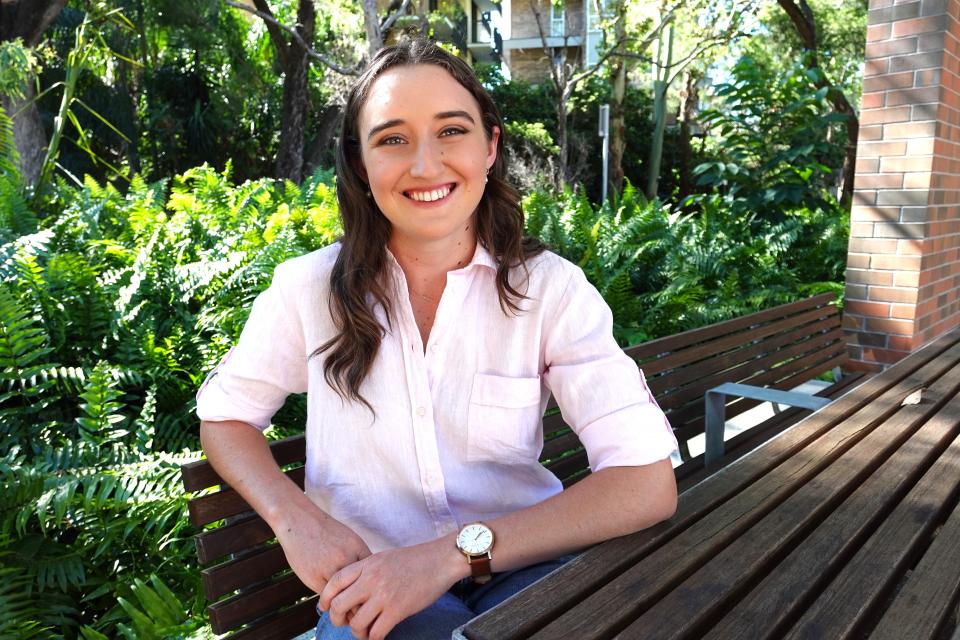
Piper Christensen.
(Photo credit: The University of Queensland.)
“I’ve grown up in the agricultural industry,” Piper said. “My family are graziers in Central Queensland – agriculture is something I’ve always been surrounded by, and I never really saw myself doing anything else.”
For Piper, studying agriculture at UQ Gatton felt like a natural extension of her upbringing and a continuation of family tradition.
“I’m a third-generation student at the Gatton campus. My mum and grandfather both studied here,” she said.
“Pa was here back when it was the Gatton Agricultural College and he claims he singlehandedly carved out the pool with a teaspoon for his mischief before finishing in 1955.
“It’s pretty special to be following in their footsteps.”
But even for someone raised on a farm, Piper’s path took its own turns.
“Much to my mother’s surprise, I chose to major in agronomy,” she said.
“When I started at UQ, I was mostly interested in agribusiness, but I’d grown up around cattle, so I felt confident in that area and wanted to learn something new.”
That curiosity has taken her from the paddock to the lecture theatre, and beyond. Through the Intercollegiate Meat Judging (ICMJ) program, Piper has competed twice with the UQ team this year and was selected to represent Australia next year.
“I went to the Northern Conference in Rockhampton and later the National Conference in Wagga Wagga where I placed in the top 17 competitors, which led to my selection for team Australia. I’ll be travelling to the United States in January to compete and tour across Texas on the American ICMJ circuit.”
That’s where her next chapter after graduation will start. Her time at UQ has helped her turn a love of the land into leadership and community.
“I’ve just finished 2 years as president of the UQ Agricultural Science Society and secretary for the UQ ICMJ committee,” she said. “I was also a residential assistant on campus, so it’s been a busy few years!”
Piper says she’s exactly where she’s meant to be.
“I don’t think I could ever see myself doing anything outside of agriculture. It’s where I belong.”
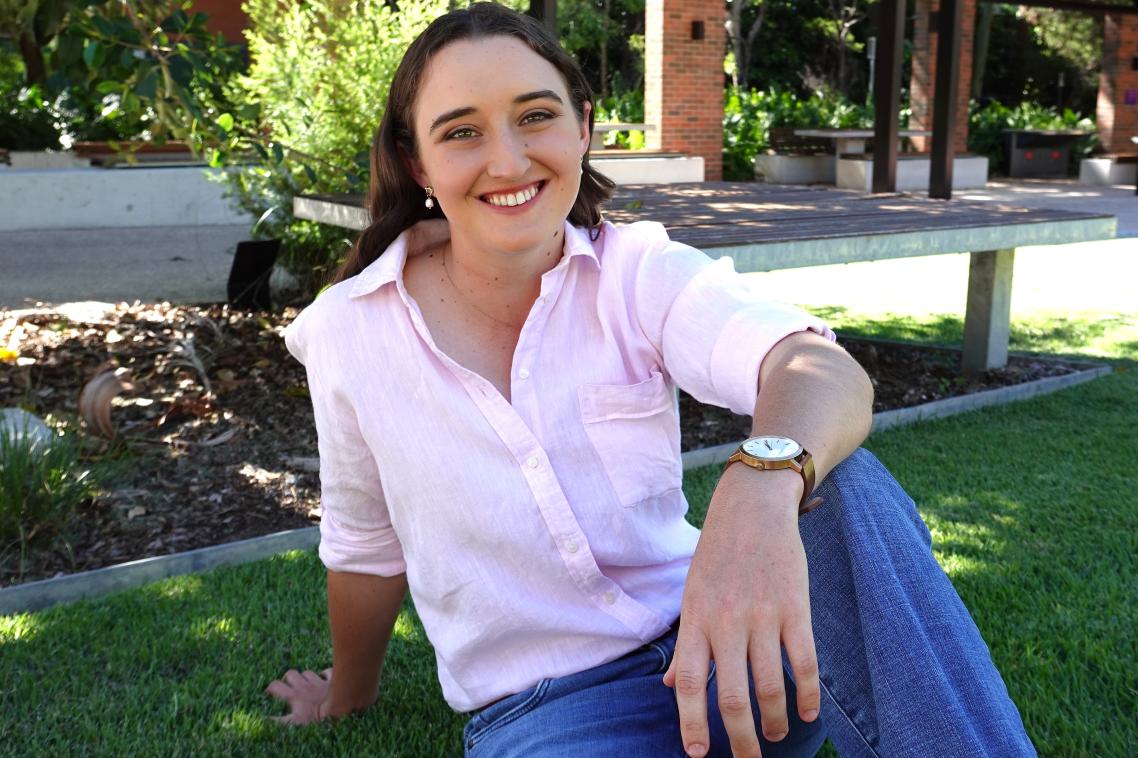
Piper Christensen.
(Photo credit: The University of Queensland. )
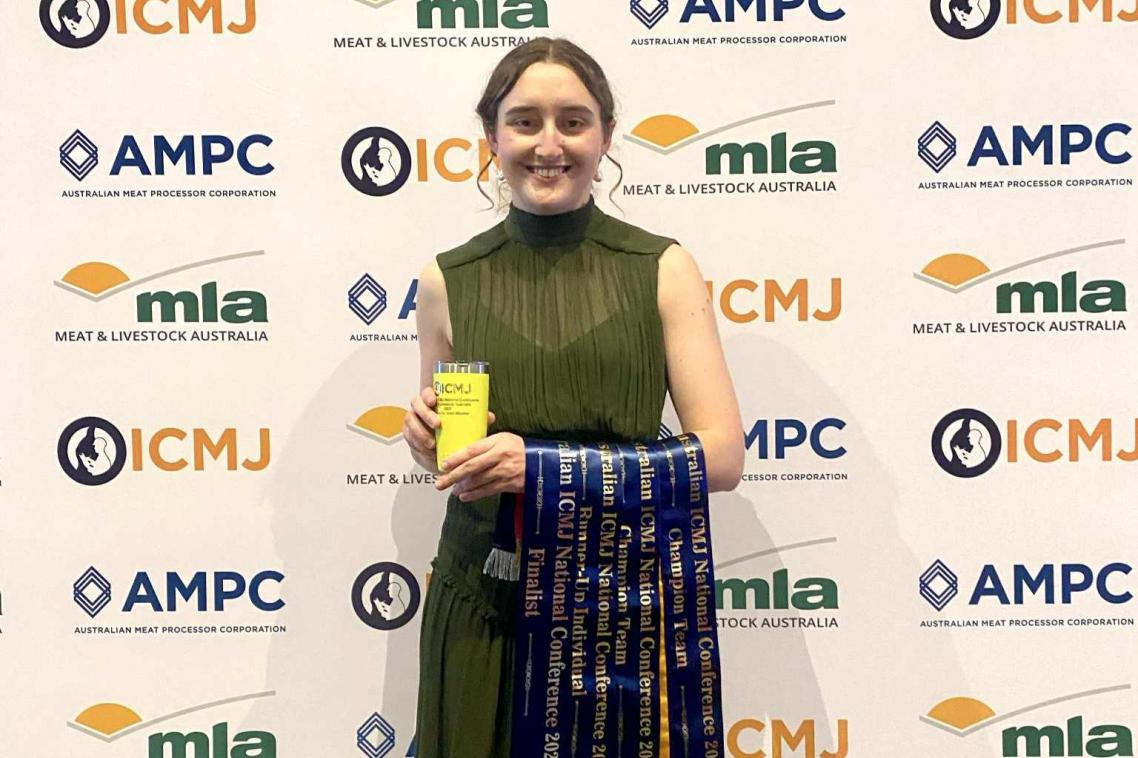
Australian ICMJ National Conference 2025.
(Photo credit: Supplied. )
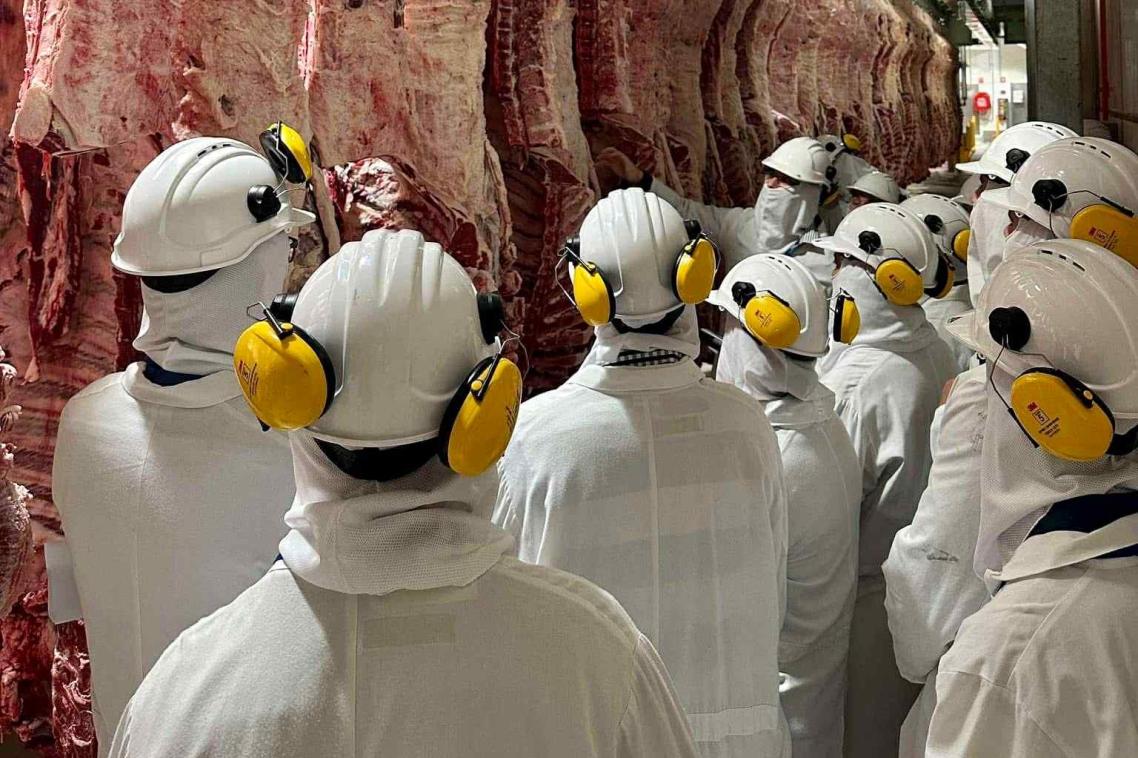
Australian Intercollegiate Meat Judging training session.
(Photo credit: Supplied. )
From business to agriculture and a new passion
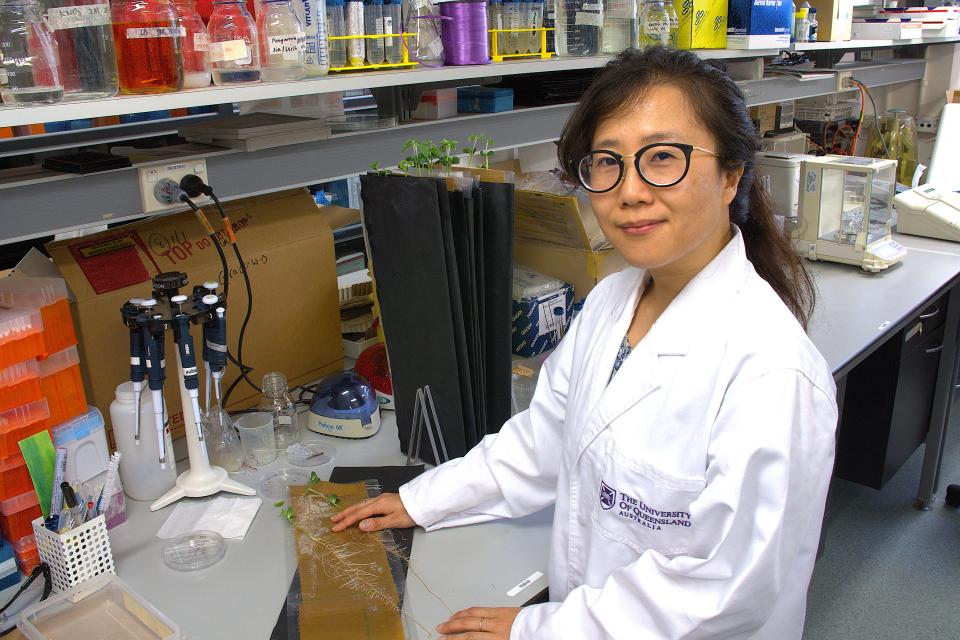
Dr Yuhan Liu.
(Photo credit: The University of Queensland.)
While Piper’s story begins in the paddock, Yuhan’s started in a city and in a completely different industry.
“My experience in Australia is mostly at The University of Queensland. I came in 2018 and did my master’s degree in agricultural science,” Yuhan said.
“That was my starting point in agriculture. Before that, I had zero background in it.”
Yuhan grew up in China, far from any farm, but small seeds of interest were already planted.
“Looking back, I did enjoy biology in middle and high school, but I didn’t realise it then,” she said.
“My parents also had a garden and grew vegetables and flowers, which probably influenced me unconsciously.”
Yuhan’s bachelor’s degree was in business management in China, which led her to working in the engineering field. But after 8 years in corporate life, Yuhan was ready for something new.
“I wanted to improve myself and do something different. I didn’t want to continue in business, and engineering didn’t feel right,” she said.
“I was inspired by researchers in the R&D centres at my previous companies, they did computational modelling and data analysis, which I found fascinating.
“I considered science and thought agricultural science would be a good choice because it’s connected to nature.”
It was a leap of faith that has paid off. Her recently conferred PhD investigates how legume-derived peptides regulate symbiosis with nitrogen-fixing bacteria to enhance biological nitrogen fixation and reduce reliance on synthetic fertilizers.
Now with her studies complete, Yuhan is currently contributing to the Hy-Gain project, which focuses on developing self-reproducing hybrid cowpea and sorghum crops to improve food security and support smallholder farmers in Africa.
“I love the connection to nature,” she said.
“Plants don’t speak our language, but if you study their phenotype and genetics, you can understand them. You can develop solutions that benefit farmers and the environment.”
She hopes to continue her research career in academia as a postdoctoral researcher.
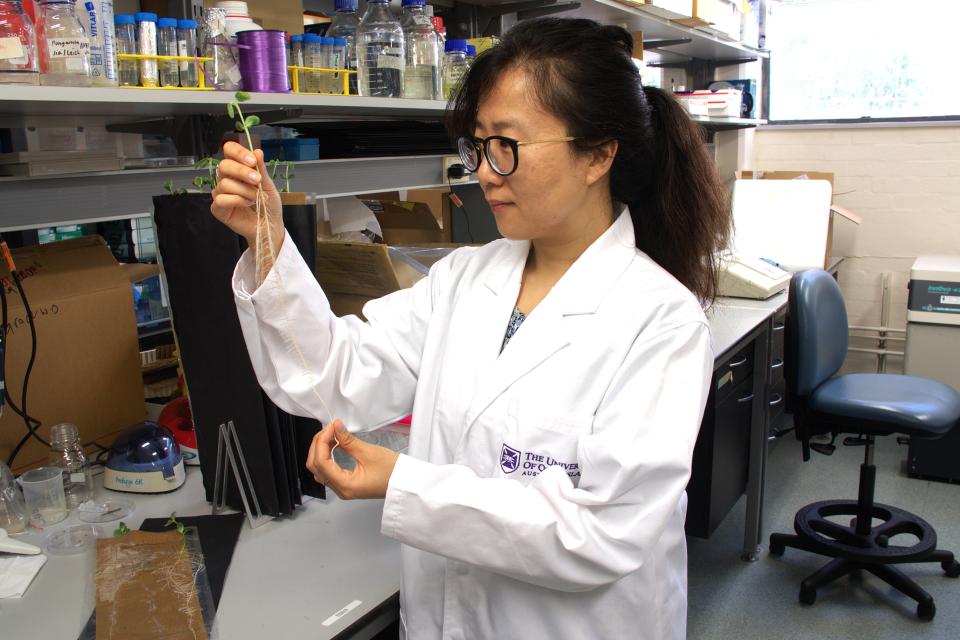
Dr Yuhan Liu.
(Photo credit: The University of Queensland.)
A shared passion, different journeys
Piper and Yuhan’s experiences couldn’t be more different. One was raised in the industry, the other found it after shifting countries and careers but both have found a sense of belonging in the agriculture industry.
Their advice to future students is simple: there’s no single pathway and many opportunities.
As Yuhan puts it, “Interest is number one. It will keep you going through challenges. Don’t be afraid to change paths. I spent 8 years in a completely different industry, and that’s okay. Sometimes you need time to figure out what you truly want.”
And for Piper, the message is clear.
“I’ve met some of my best friends, gained hands-on experience and been supported to achieve things I never thought I could.”
Related articles

US agency selects UQ for ‘one of the world’s most ambitious biomanufacturing programs'
